


Literacy is often understood as the ability to read and write. But for a woman trying to access health insurance, a family seeking treatment, or a worker navigating a government entitlement, literacy means something more immediate: knowing what support is available, understanding its implications, and being able to access it.
For many women in low-income households, accessing healthcare involves more than finding a health facility. It can mean losing a day’s wages, paying for transport and medicines, understanding an unfamiliar health insurance scheme, or completing documentation and application procedures. Hence, even when services and entitlements exist, these barriers can prevent people from receiving the support they need.
Swasti’s Integrated Social Protection and Health Initiative in Ramanathapuram, Tamil Nadu has highlighted an important lesson: access to health entitlements depends not only on whether people know about a scheme, but also on whether they understand the process, can manage the associated costs and receive the support needed to complete it.
From health awareness to access to care
During FY 2025-26, the initiative worked across 13 panchayats and 59 villages in the Kadaladi and Mudukulathur blocks of Ramanathapuram. It focused on women from marginalised and vulnerable households, including informal workers, daily-wage earners and members of socially disadvantaged communities, for whom healthcare costs and time away from work can create significant barriers.
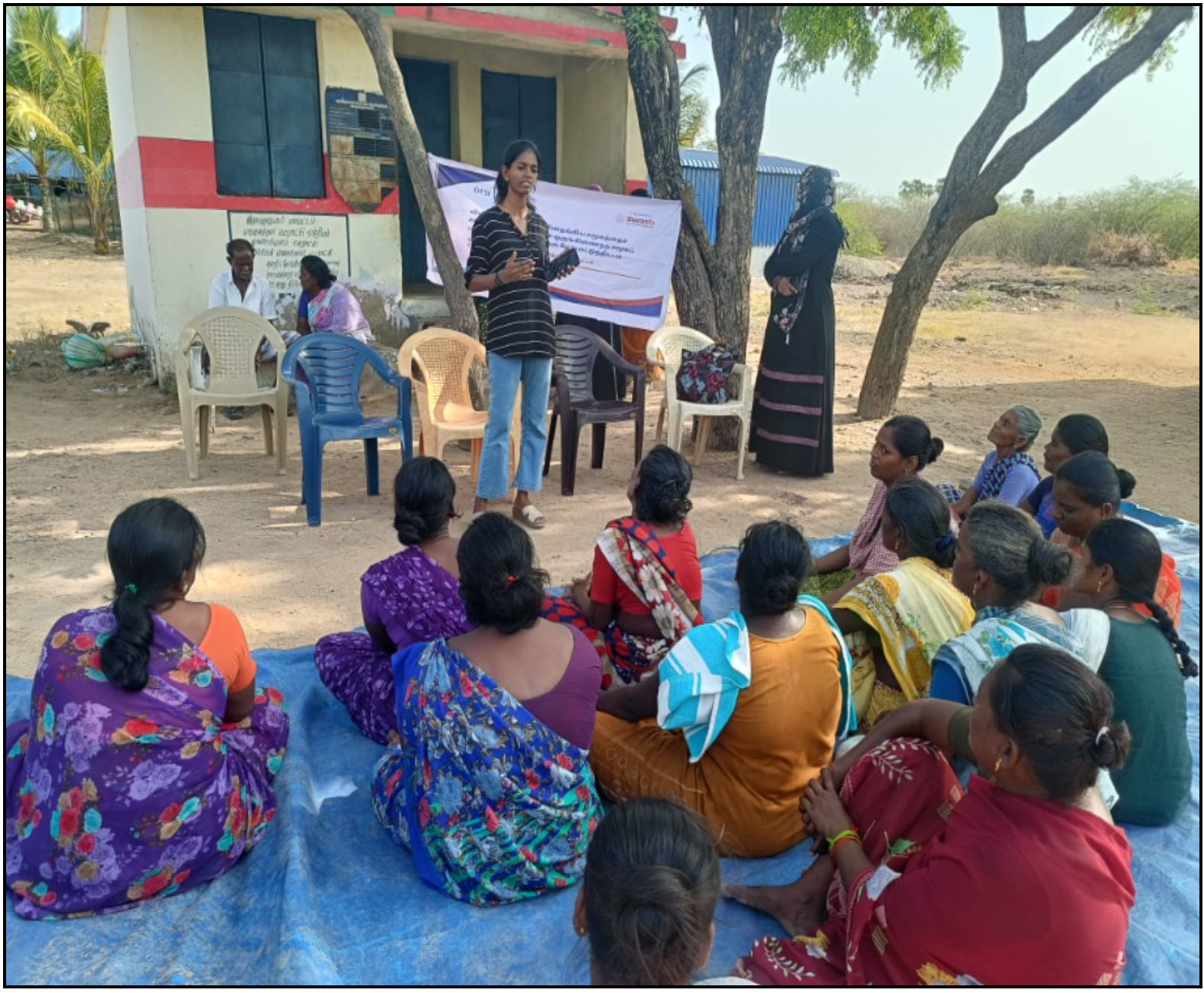
The programme conducted 80 health awareness sessions and reported reaching 5,281 people through health screening and outreach efforts. Screening identified 289 cases of diabetes, 228 of hypertension, 82 of anemia, and five cases of tuberculosis. People identified with health concerns were connected to Primary Health Centres (PHCs) and hospitals for continued care and monitoring.
These results demonstrate the value of bringing preventive health services closer to communities. They also highlight a critical consideration for CSR-funded health programmes: screening is an important starting point, but its value depends on what happens next. People need to understand their results, know where to seek care, overcome practical barriers to reaching facilities, and receive support to follow through on referrals.
Connecting health, finances and access to entitlements
Social protection literacy involves three interconnected dimensions:
- Understanding health information
- Weighing the financial implications of seeking care and
- Navigating the procedures required to access services and entitlements.
These dimensions influence one another. A woman may understand the need for treatment but postpone it because of the cost. A household may be eligible for health insurance but struggle with documentation or the application process. Awareness alone cannot resolve these barriers unless people also receive practical support.
The need of the hour is to examine whether people successfully enrol in schemes, use their coverage when needed, complete referrals, and experience fewer financial barriers to healthcare, moving beyond mere facilitation.
How practical support can make a difference
Nasreen Fathima, a daily-wage worker from Sayalkudi village in the Kadaladi block, was pregnant in 2025. During an awareness session at an MGNREGA worksite, she learned about government schemes relevant to her circumstances. The Swasti team enabled her to obtain the e-Shram card and complete the process of enrolling in relevant welfare schemes.
In June 2025, Nasreen received ₹6,000 under the Pradhan Mantri Matru Vandana Yojana. According to the programme report, she used the money for medical expenses and nutritious food. She gave birth to a baby girl in November, and both mother and child were reported to be in good health.
Nasreen’s experience shows how outreach can become more meaningful when it is connected to practical assistance. Information helped her identify a potential benefit; procedural support helped her access it; and the financial assistance contributed towards expenses during pregnancy.
From information to informed action
These experiences remind us that literacy must extend beyond the ability to read and write. Health and financial literacy are essential to helping people understand their entitlements, make informed decisions about their health, and navigate the systems designed to support them. For women and families facing economic and social barriers, this understanding can influence whether a health concern receives timely attention or a government benefit reaches a household when it is needed most.
Swasti’s Unified Health and Development (UHD) model recognises information as a critical enabler of access to health services and social protection.
The way forward is to move beyond awareness towards meaningful access, ensuring that people not only know about their entitlements but can navigate the systems, receive the necessary support and access the services they need. This is where health and financial literacy can play a vital role in strengthening social protection and advancing equitable access to healthcare.
