


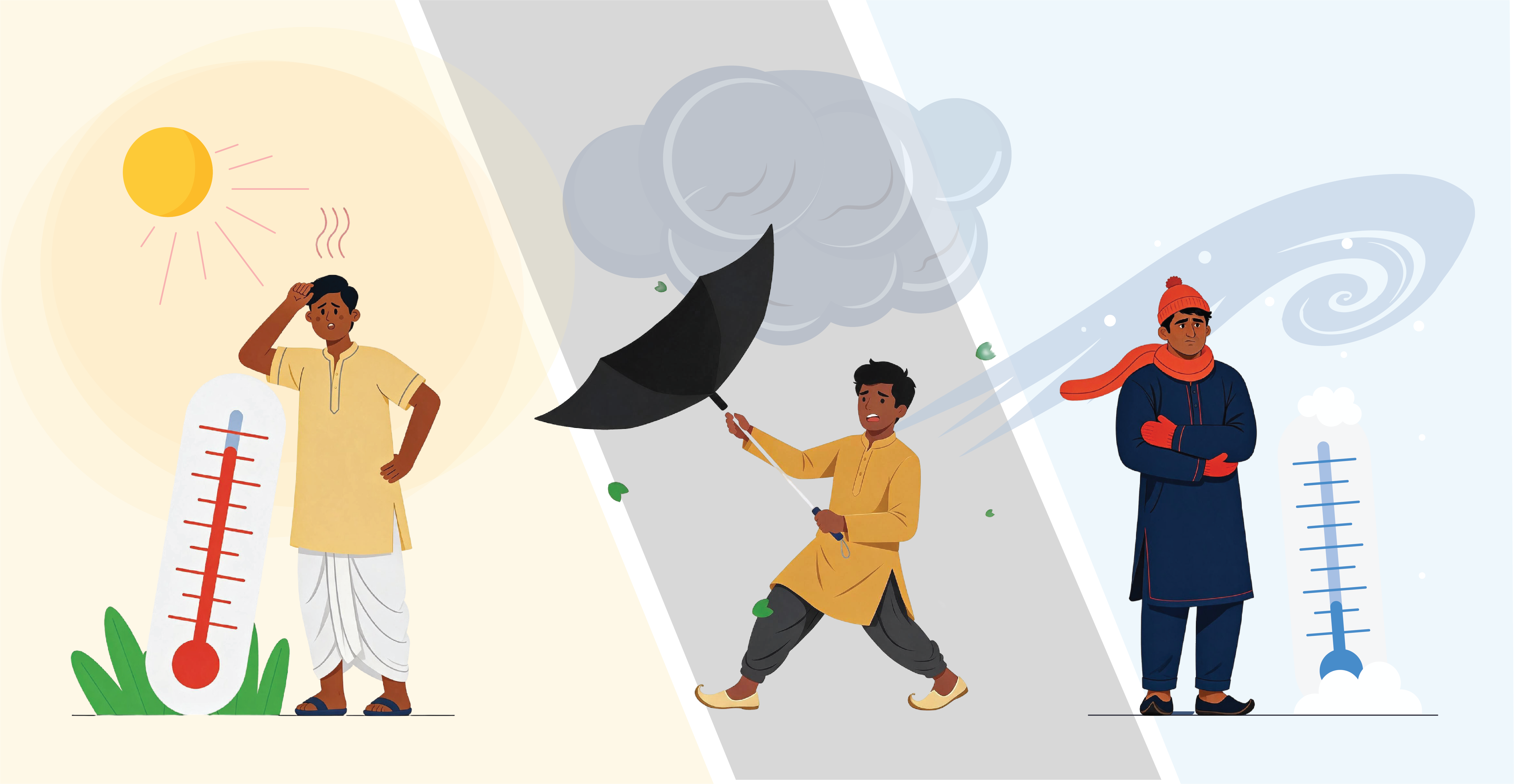
Climate resilience has become a defining priority for governments, development organisations and communities alike. Across sectors, there is growing investment in early warning systems, climate-smart infrastructure, behaviour change campaigns and technologies that help people anticipate and adapt to climate risks.
These are important advances.
But one theme consistently surfaced during conversations at London Climate Action Week: preparedness alone is not enough. As climate shocks become more frequent and more intense, we also need to ask a different question - what enables people to recover?
For a long time, resilience has largely been framed as the ability to anticipate, withstand and adapt. Increasingly, however, it is becoming clear that recovery is just as important. A community's resilience is not determined only by whether it can prepare for a crisis, but by whether it has the support to recover without falling further into vulnerability.
That distinction has important implications for climate and health.
One of the more compelling ideas I encountered was the use of parametric insurance to support workers whose livelihoods are directly affected by extreme heat. What interested me wasn't the financial instrument itself, but what it represented. It reflected a shift in thinking; from preparing people for climate risks to recognising that people also need protection after those risks materialise.
In public health, we often encourage preventive action. We ask people to stay hydrated during heatwaves, avoid outdoor work during the hottest hours of the day and seek care when they experience symptoms of heat stress.
These recommendations are scientifically sound.
But they also assume that people have the ability to act on them.
For millions of workers, particularly those in the informal economy, that assumption does not hold. Construction workers, sanitation workers, agricultural labourers, street vendors and countless others cannot simply choose to stop working because temperatures are unsafe. Their livelihoods depend on showing up every day, even when the risks are well understood.
This is not a failure of awareness. It is a question of security.
Some time ago, during Swasti's own work on climate and health, one participant captured this reality in a single sentence:
"Health can wait, but livelihood cannot."
I have found myself returning to those words often.
They remind us that vulnerability is rarely created by climate alone. It emerges from the interaction between climate, income, employment, social protection and access to essential services. If people continue working through dangerous conditions, it is often not because they underestimate the risks, but because they have no viable alternative.
That is why discussions around climate resilience need to move beyond adaptation in its narrowest sense.
Resilience is also about creating systems that give people choices.
If a worker develops a heat-related illness, can they afford to take time to recover? If a frontline health worker is repeatedly exposed to extreme temperatures while serving the community, what protections are available to them? If climate events interrupt someone's livelihood, are there mechanisms that prevent a temporary shock from becoming a long-term crisis?
These questions deserve greater attention.
The idea of climate-responsive insurance is one possible response, but the broader principle extends well beyond insurance. It points towards the importance of integrating climate adaptation with social protection, occupational health, financial security and resilient public systems. These conversations are often held separately. Climate change is increasingly demanding that we bring them together.
This is particularly relevant in countries like India, where the people most exposed to climate risks are often those with the fewest buffers against them. Community health workers, factory workers, agricultural labourers and other essential workers continue to keep systems functioning despite growing environmental stress. Building climate resilience therefore also means investing in the resilience of the people who hold these systems together.
As discussions around climate and health continue to evolve, I believe our understanding of resilience must evolve with them.
Preparedness will always remain essential.
But resilience should also be measured by what happens after the crisis…whether people have the support to recover, whether institutions are equipped to respond, and whether communities can regain stability without carrying the long-term burden of a climate shock.
Check out our climatexhealth work here: https://swasti.org/climate-x-health
