

It’s easy to forget, but even more critical to remember, that menstrual and reproductive health goes far beyond hygiene. It’s about dignity and equity. In India, progress has been made in raising awareness and expanding services, but for millions of women and girls, navigating their health is still shaped by stigma, misinformation, and systemic barriers.
At the heart of breaking these barriers are frontline health workers, ASHA workers, peer educators, and grassroots champions, who serve as the first point of care and often the only source of accurate, trusted information. Be it on factory floors or in remote villages, they are not only delivering services but also challenging taboos, rebuilding trust in healthcare, and empowering women with the language and tools to advocate for their own well-being.
This blog amplifies their voices—the quiet revolutionaries working every day to shift narratives, spark conversations, and creating ripples of change in communities across the country.
Reclaiming Health in Everyday Spaces
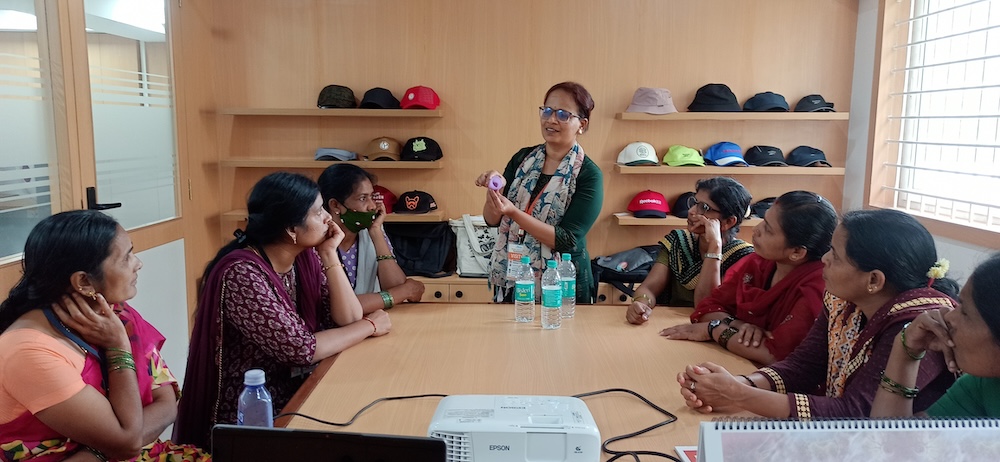
“Educating one woman can bring change in her family and then in society,” says Bhavyashree, a Senior Program Associate at Swasti. Over the past six years working with garment factory workers, she has witnessed how a single empowered voice can ripple outward teaching daughters, guiding sisters, and even shifting long-held beliefs within families.
For many women employed in garment and manufacturing units, factories are more than their place of work. They are often the only space outside their homes. “Most of the women I work with don’t have access to accurate health information,” Bhavyashree explains. “They don’t feel comfortable discussing their bodies elsewhere. That’s where we come in to create safe spaces where they can speak freely, without fear or shame.”
These spaces often mark the first time a woman learns the language of her body, like understanding what’s normal, what needs care, and how to seek help. These interventions move women from passivity and silent endurance to self-awareness and agency, even in environments where taboos run deep.
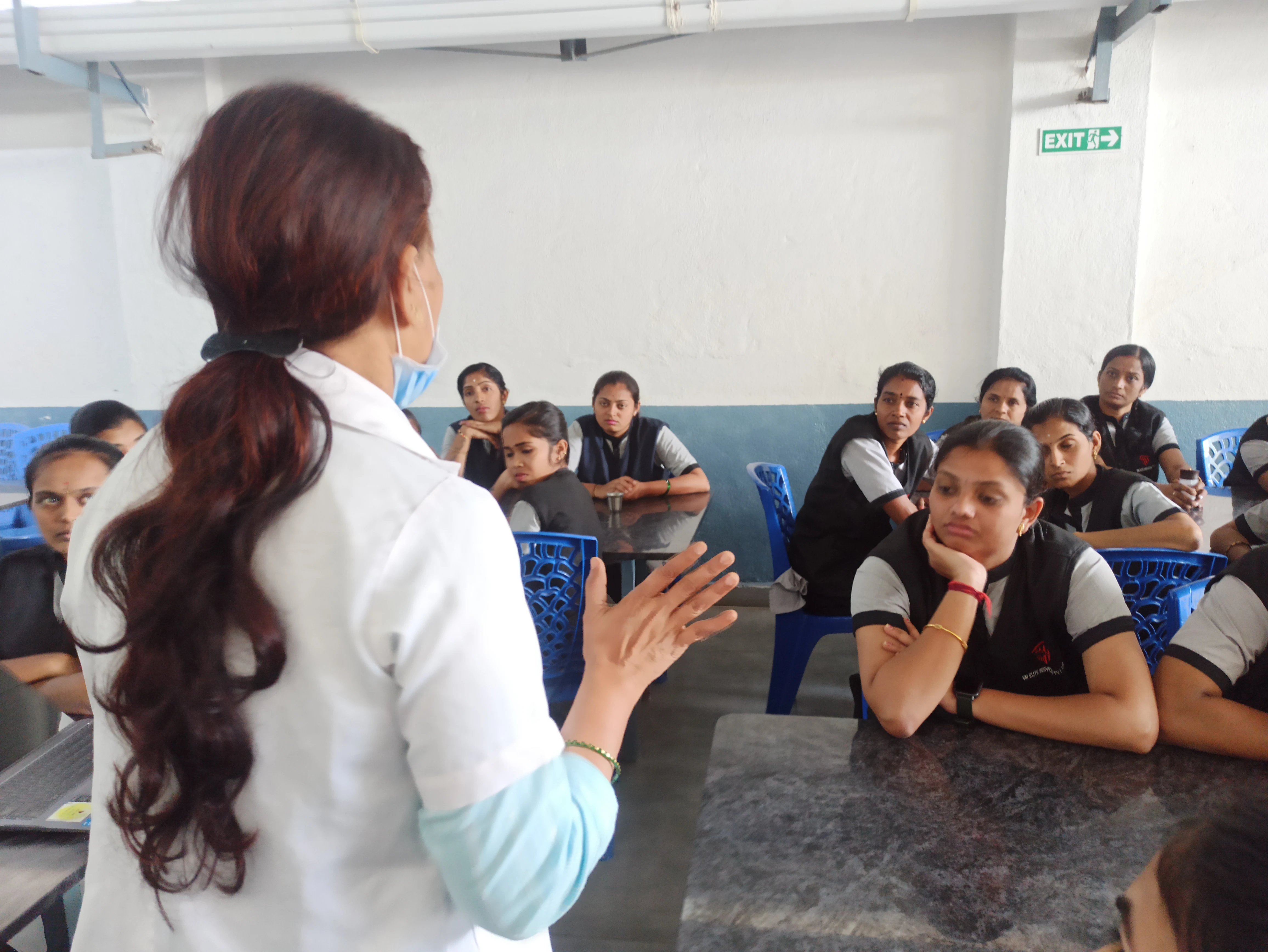
The silence around sexual and reproductive health doesn’t end at home. Sukanya, Program Manager who has worked with factory workers and community health champions at Swasti for over twelve years, sees how far-reaching the gap in knowledge is. “During a recent session, even teachers admitted they lacked accurate information,” she recalls. “Many students, particularly girls, shared that they had never been educated on menstrual and reproductive health beyond what their grandmothers or mothers shared.” This generational void creates a breeding ground for misinformation, shame, and preventable health issues. Without early, accurate, and judgment-free education, girls grow up internalizing confusion and fear, which affects how they treat their bodies for years to come.
Transforming Taboos into Conversations
This silence has profound consequences. Sukanya recalls the story of one girl who endured severe period pain for years, never telling her parents out of fear of their reaction. “Through our work,” Sukanya explains, “we not only provide information on menstrual hygiene and reproductive health but also guide girls on how to access medical care when needed.” This guidance is critical. When pain is normalized, care is denied. When care is denied, trust in the healthcare system erodes. The grassroots education frontline workers provide goes beyond health tips. It dismantles harmful myths and rebuilds women’s trust in their bodies and their right to be heard and healed.
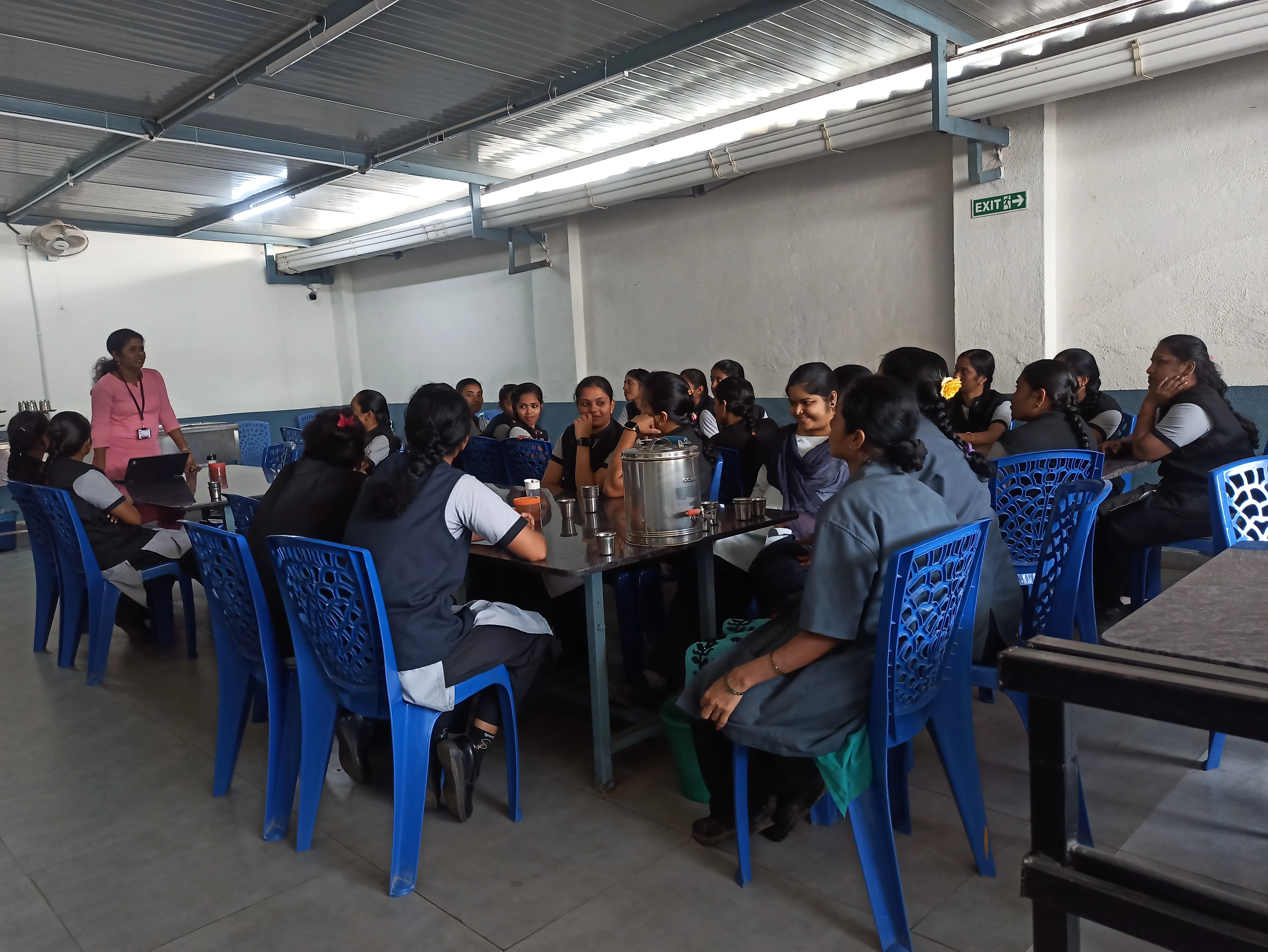
Creating spaces for openness is essential to overcoming these barriers. “Initially, many are hesitant to talk,” Bhavyashree says. “But once they see others asking questions, they start opening up too. Sometimes, they come to me privately with doubts they’ve never voiced before.” Curiosity replaces shame. Confidence replaces silence. “I’ve seen women who once felt embarrassed to even say the word ‘period’ now confidently talk about menstrual hygiene and even help their coworkers.”
As a male trainer in these sensitive spaces, Satish recalls “There was hesitation but by creating a comfortable environment during training sessions, we encouraged openness and dialogue.”
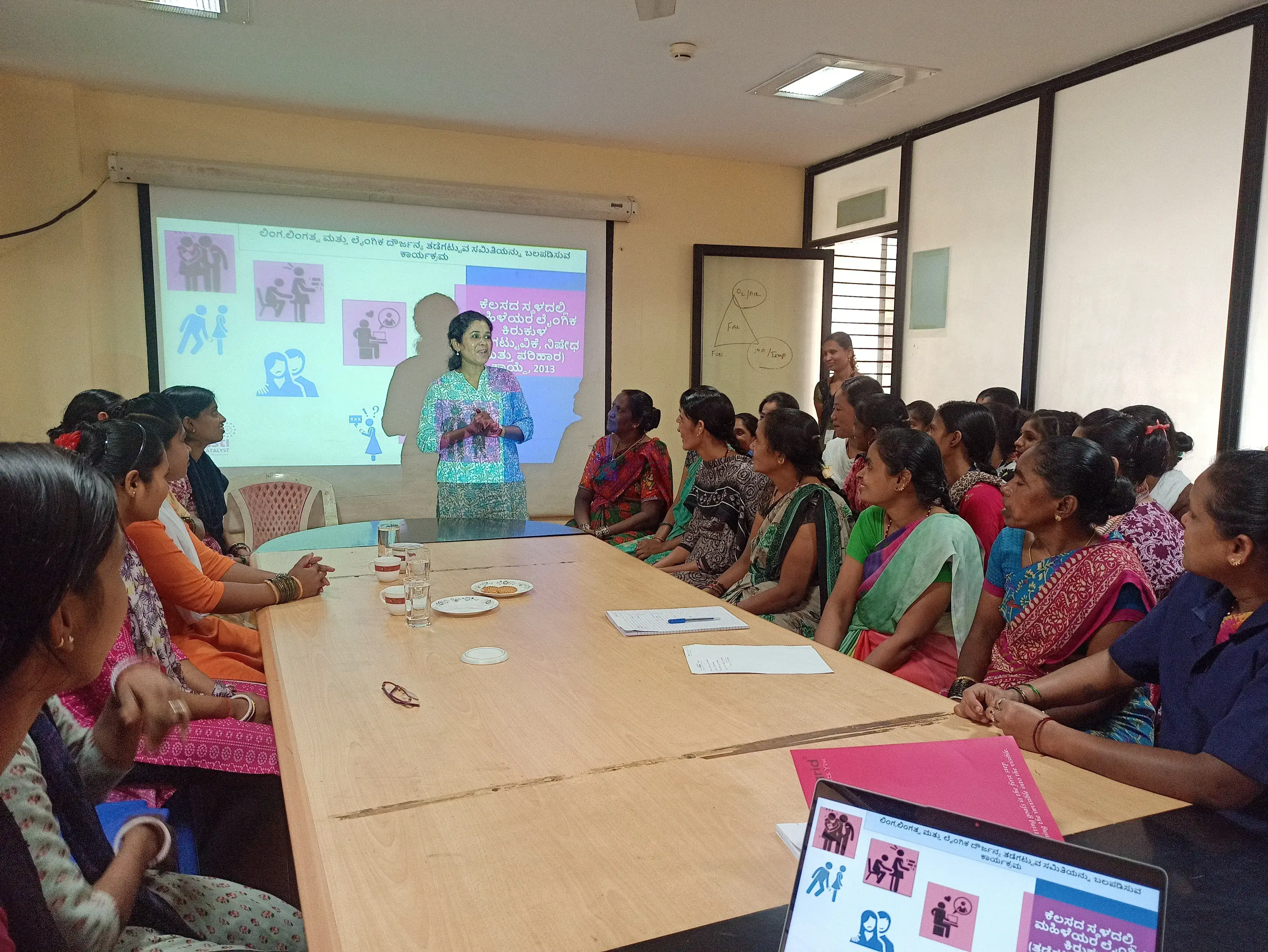
How Peer Learning is Transforming Menstrual Health
Satish recounts the story of a mother who attended a training and transformed the way her family approached menstruation. “She was hesitant to involve her son, believing men shouldn’t be part of these discussions. But after our session, she realized the importance of educating both her children. She now teaches her son how to support his sister, breaking the cycle of stigma and silence.”
Another story speaks to the program’s ripple effect. A trainee, after gaining knowledge and confidence, took the initiative to visit a local school and educate ninth and tenth-grade girls on menstrual health. “Seeing our trainees become educators in their own communities,” Satish says, “is one of the most rewarding parts of our work.”
One of the program’s most powerful tools is peer learning. “Many women are initially resistant to alternatives like menstrual cups due to cultural beliefs,” Satish explains. “But when they see videos of women who’ve tried them and hear firsthand testimonials, their hesitation begins to fade.” By the end of some sessions, many participants who were once reluctant not only become willing to try these alternatives but emerge as champions advocating for them.
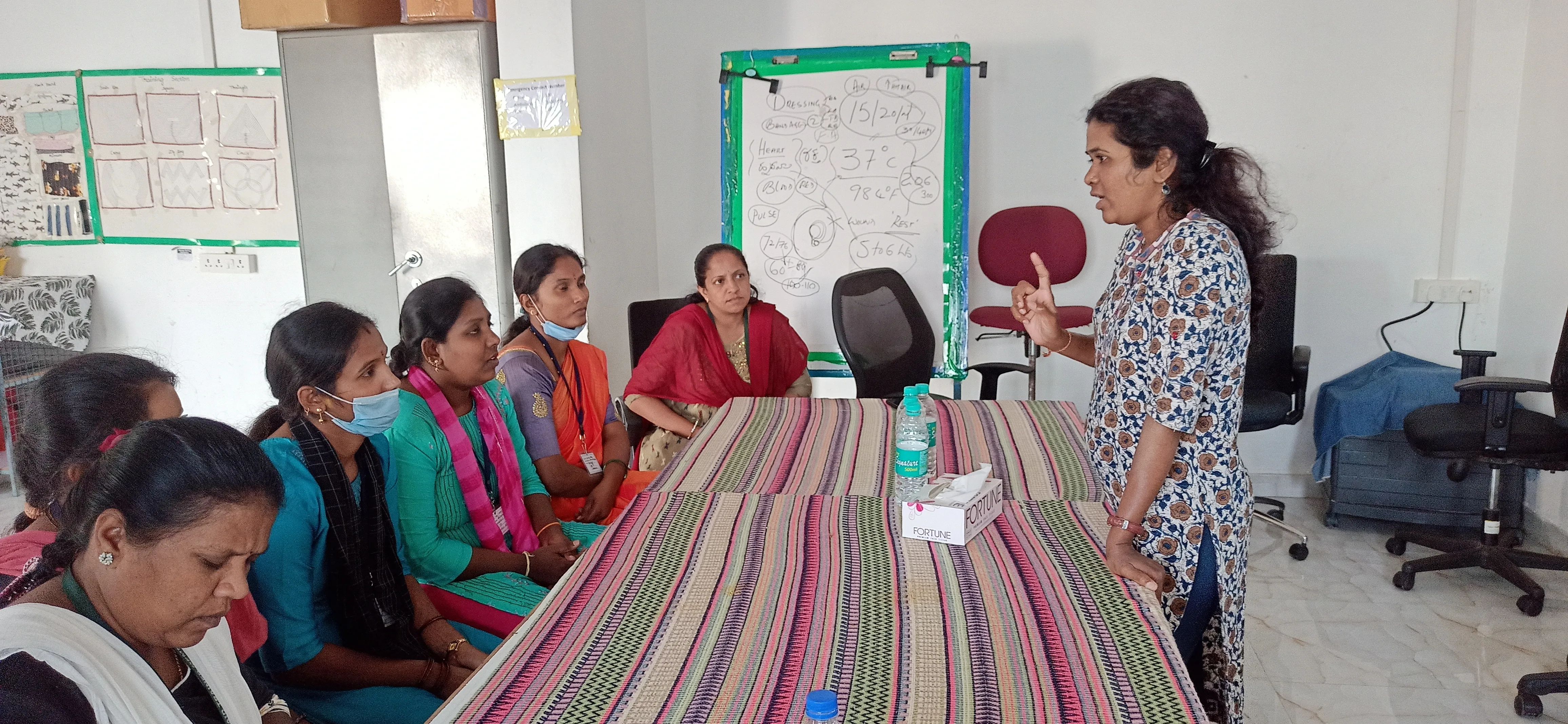
Health, Heat and the Climate Crisis
However, environmental challenges also exist alongside cultural ones. Climate change is now a growing concern when it comes to women’s health. “Rising temperatures, poor water quality, and pollution affect hygiene,” Bhavyashree notes. “When there’s a lack of clean water, maintaining proper hygiene during periods becomes difficult, increasing the risk of infections.” Add to that the intense heat in poorly ventilated factories, and you have a recipe for physical exhaustion, dehydration, and compromised reproductive health.
These environmental factors compound existing challenges. “Women often tell me they feel dizzy and fatigued when working in extreme heat,” Bhavyashree says. “If they are pregnant or menstruating, the stress on their bodies is even greater.” Such conditions highlight the urgent need not just for education, but for structural support and climate-resilient health infrastructure.
At its core, this work is not just about periods, hygiene kits, or training sessions. It’s about restoring agency. It’s about giving women the language, tools, and confidence to care for themselves and each other. “It’s not just about personal health,” Bhavyashree emphasizes. “It’s about empowering women to break cycles of misinformation and build a healthier future for the next generation.”
Satish sums up this vision simply but powerfully: “Women’s health should not be a taboo topic. Families, workplaces, communities must work together. Investing in sexual and reproductive health today creates a healthier, stronger future for all.”
The voices of frontline workers powerfully remind us that access to quality healthcare and accurate knowledge for women and girls is the foundation for healthier communities, empowered lives, and a more just and equitable future. At Swasti, we are deeply committed to bridging the gaps and overcoming the challenges faced by marginalized populations in Sexual and Reproductive Health (SRH). Read more about our work in the domain of SRH here: https://swasti.org/our_work/Sexual-Reproductive-Health-SRH
Authored by Shubhangi Thakur
Last engaged with Swasti on 31st October 2025
Edited by Kamalkoli Majumdar, Siddharth Chaitanya
