
Health and wellbeing are shaped by more than access to healthcare. They are shaped by whether a family can recover from a bad harvest, afford treatment without falling into debt, or rely on a steady source of income when work becomes uncertain.
For many households, the building blocks of wellbeing are already present: farming skills, experience raising livestock, or years of labour in the informal workforce. What is often missing is the support that helps those existing strengths become more secure - access to finance, government entitlements, market connections, and social protection.
Experiences from Swasti's work in rural Tamil Nadu show how strengthening these connections can improve not just incomes, but people's ability to live healthier, more resilient lives.
When economic security becomes a health outcome
For 44-year-old Mohana from P. Thottiyankulam village in Virudhunagar, dairy farming had long been an aspiration. She and her husband balanced farming with daily-wage labour, leaving household finances vulnerable to uncertainty. As a shareholder in the Mesavaram Farmers Producer Company, Mohana was guided by project staff to access support under the Dairy Scheme. She secured a bank loan of ₹1 lakh, purchasing two cows, building a shed, and growing fodder on her own land. Today, the cows produce around eight litres of milk each day, generating approximately ₹400–500 in daily income. The additional income does more than repay a loan. It creates greater financial stability, allowing Mohana to save for her daughters' future while reducing the everyday stress of unpredictable earnings.
Small assets can strengthen resilience
Prema, 56, from Aladipatti village, already knew how to rear goats. Yet despite her skills, her family depended largely on MGNREGS wages that were often insufficient to meet household needs. She received ₹10,000 in financial assistance for goat rearing enabled by Swasti’s social protection program and herself contributed another ₹3,000 to purchase a pregnant goat. Within two months, the goat gave birth to two kids, creating the possibility of earning an additional ₹15,000–20,000 over the following months. The investment itself was modest. Its significance lay in reducing financial vulnerability by building on knowledge Prema already possessed.
Support works best when systems connect
For Santhanamari's family, declining rainfall had made farming increasingly uncertain.
When a private financial institution offered livelihood loans through local self-help groups, many community members hesitated. However, Swasti project staff helped verify the program, explain the process, and build confidence in accessing it. Santhanamari received a ₹50,000 loan, invested in a milch cow, grew green fodder on her land, and connected with the Aavin Milk Cooperative as a reliable buyer. The cow now produces five to six litres of milk each day, generating an additional ₹200–250 in daily income. The outcome was not simply access to credit. It was the combination of finance, information, and market access that made the investment sustainable.
Social protection protects wellbeing too
Not every pathway to wellbeing begins with earning more. Sometimes it begins with preventing one crisis from becoming another.
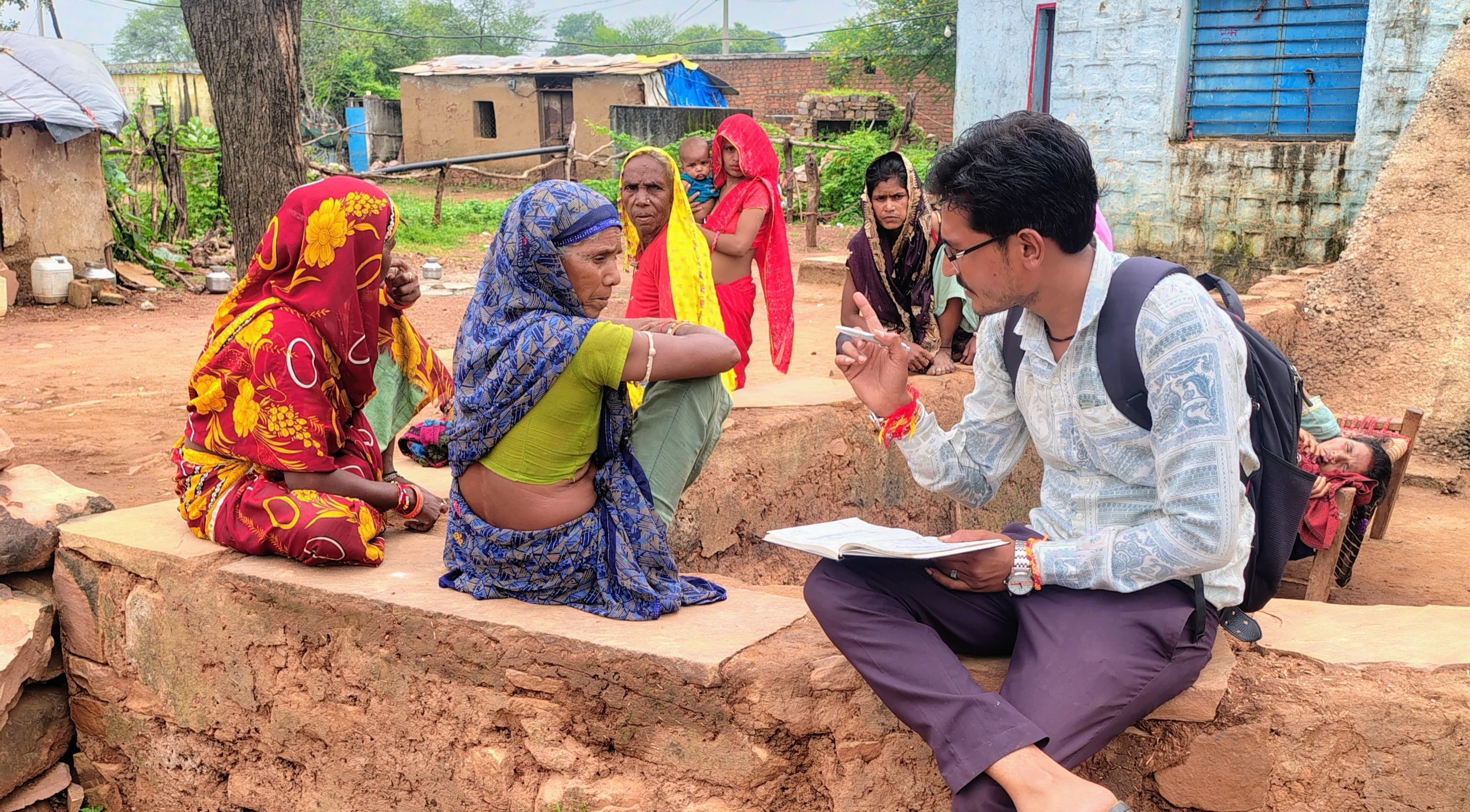
Kasthuri, a 26-year-old labourer from Aathipatti, was undergoing treatment for kidney stones while supporting two school-going children. Although she had heard about the Chief Minister's Health Insurance Scheme, she did not know how to apply. Through community outreach, project staff helped her understand the process, complete the application, and obtain her health insurance card.
For Mariyammal, a 46-year-old construction worker from Palayampatti, the challenge was different. She had applied for a Labour Card without realising her application had been rejected. At a project-supported camp, the issue was identified, her application was reopened with the Labour Welfare Office, and she ultimately received the card.
Neither woman changed her occupation. What changed was her access to protections that help workers navigate illness, employment insecurity, and financial shocks without losing everything they have built.
Wellbeing grows when systems work together
These experiences reflect an important lesson: improving wellbeing is not only about increasing income or expanding healthcare access. It is about strengthening the systems that help people stay healthy, financially secure, and resilient when challenges arise.
A loan becomes more meaningful when it connects to a viable livelihood. A productive asset matters more when there is a reliable market. Health insurance and labour entitlements become powerful when people can actually access them.
This is where community-based support makes a difference: connecting information to opportunity, finance to capability, and social protection to the people who need it most.
For families living with uncertain incomes, wellbeing is built through these interconnected supports. It means creating greater room to manage daily expenses, seek healthcare when needed, keep children in school, and recover from setbacks without starting over.
Because lasting wellbeing is not built by a single intervention. It grows when people can build on the strengths they already have and when the systems around them make that possible.
Author - Kashish Kamra, Project Associate, Swasti
Editor - Kamalkoli Majumdar, Brand Communications Manager, Swasti
